


wild blue earth blog
HSCG Environmental
Myths Busted: Fair Trade
You may have seen the iconic blue and green Fair Trade logo at the grocery store; the blue represents the potential of the blue sky, while the green represents the growth of new life.
But, what does Fair Trade as an organization represent?
In this article, we’ll bust a few myths about Fair Trade and tell you everything you need to know about the organization.
Myth #1: Fair Trade products are more expensive.
Let’s be real - everything is more expensive now. For a long time, consumers have assumed that a certain group of products will always cost more, however; products labeled “organic”, “Fair Trade”, and “cruelty-free”.
The reality is that items with the Fair Trade logo are not more expensive just because they’ve been certified as Fair Trade. According to Fair Trade’s website, “Fair Trade organizations work directly with producers, cutting out middlemen, so they can keep products affordable for consumers and return a greater percentage of the price to the producers.” In a nutshell, this means that just because an item is Fair Trade, it doesn’t mean you’re going to pay more for it, which means cost should not discourage you from searching out these products.
Myth #2: Fair Trade only applies to food products (specifically coffee and/or chocolate).

If you associate Fair Trade with coffee, you’re not incorrect; coffee was the very first agricultural product to be certified Fair Trade all the way back in 1988. However, Fair Trade now applies to a lot of handcrafted and agricultural products, which means you have a huge variety of Fair Trade products to choose from.
Myth #3: Anyone can stick the Fair Trade logo on their package.
Another let’s be real moment here…anyone can stick any logo they want on their package, that’s true. Until they get caught.
There are a few different ways to legally use the Fair Trade logo. To simplify these ways very briefly, you can either be certified as a single-ingredient producer OR as someone who sells finished products (like your soap). Fair Trade uses an independent certification company called FLOCERT to carry out these certifications.
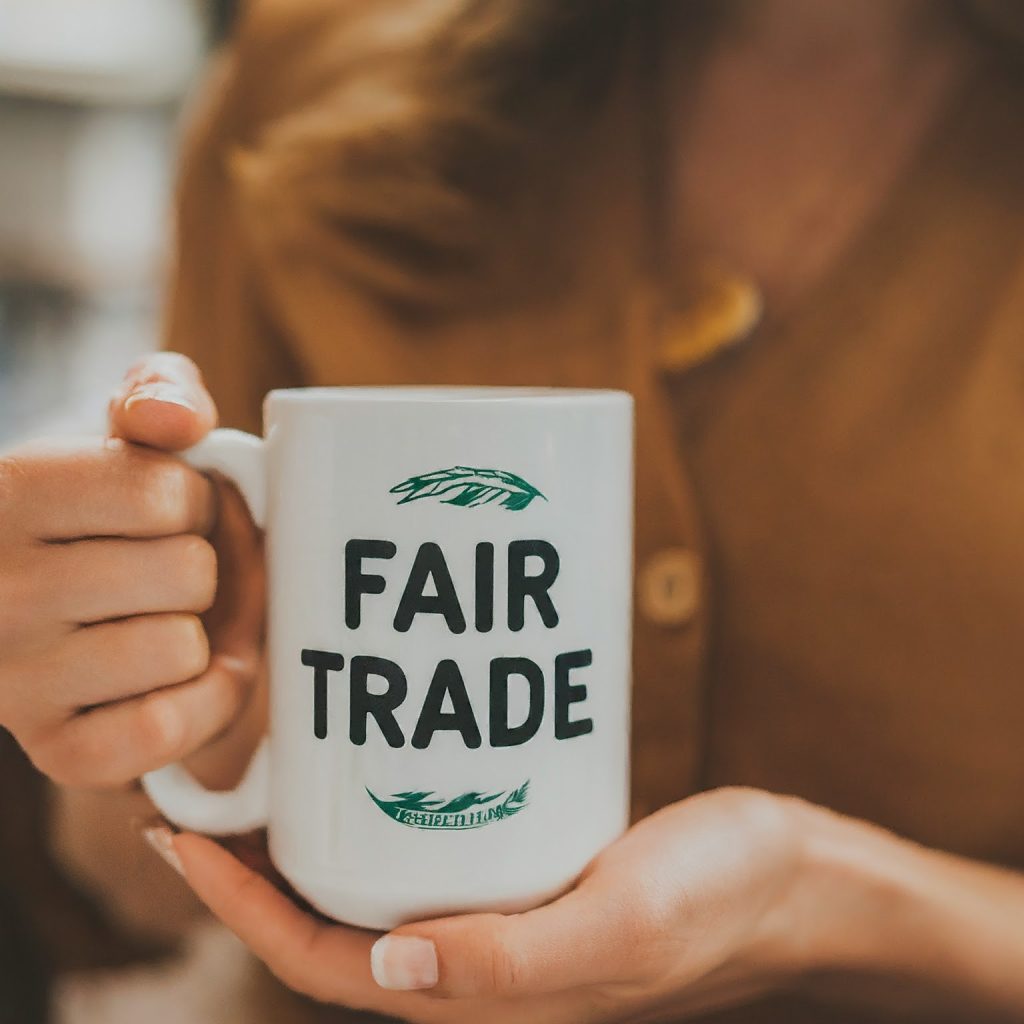
So yes, while any producer could, technically, slap the Fair Trade logo on their package and call it a day, it is very unlikely that a company would risk those kinds of legal consequences to do so without the proper certification or written approval from the Fairtrade organization.
Myth #4: Fair Trade products are hard to find.

Fair Trade ingredients and products aren’t too hard to find if you know what you’re looking for!
The easiest way to determine if a product is Fair Trade is to look at the label; if it has the logo, it’s pretty safe to assume that you’re holding a Fair Trade product.
However, if you’re shopping online from a supplier (if you’re buying ingredients) and you’re unsure, don’t be afraid to ask your supplier if an item you’re looking for is Fair Trade certified.
And, if all else fails, you can always do a quick Google search to find Fair Trade brands.
Myth #5: Consumers really don’t care about Fair Trade.
It is true that, once upon a time, customers weren’t as concerned about things like fair trade, organic, cruelty-free, etc. Today’s consumers are more fixated on where their products are coming from, however; when they pick up a product, many of them want to know where it was sourced, if it was made ethically, etc.
It may also be true that your current customer base isn’t as concerned about Fair Trade, but think of it this way; it won’t hurt your current customers for you to explore Fair Trade options, and it certainly won’t hurt your chances of attracting new customers. After all, makers need to continue learning and growing to stay competitive in today’s markets.
Conclusion
Fair Trade has evolved a lot since the 80s, and it’s important that you do your homework when it comes to purchasing fair trade ingredients or claiming that your product itself is fair trade.
To learn more about Fair Trade, check out the resources below:
featured

5 Reasons Why Local is Better for the Environment
Local is better. Handmade is better. Buy local. Support small businesses. We see these phrases all the time, but do you know why shoppin...


